

The Road Not Taken: Jamaica’s Opportunity for a Night-Time Economy
As Jamaica emerged from the shadow of COVID-19, we faced a pivotal moment. Instead of seizing the chance to reshape our work culture, we rushed back into the familiar chaos of daily commutes and office routines. The pandemic forced many businesses to adopt work-from-home (WFH) arrangements, and the results were eye-opening. Productivity held steady or even improved, proving what many employees had long suspected: flexibility works.
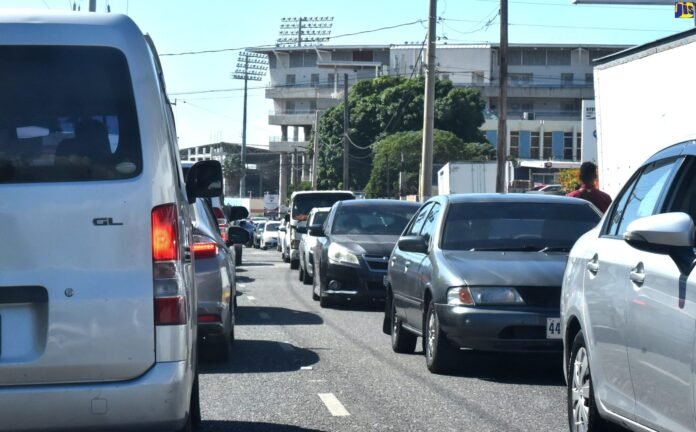
Yet, as soon as restrictions eased, many companies swiftly abandoned remote work policies, reverting to outdated operational models. This decision has had dire consequences, especially on our roads. Kingston’s traffic situation has spiraled into a national crisis, costing workers hours of unpaid labor and taking a toll on their mental and physical health. Montego Bay and Mandeville are also grappling with worsening congestion, highlighting the urgent need for better traffic management.
E.G. Hunter, CEO of the National Works Agency, pointed out that a significant contributor to Kingston’s traffic woes is the prevalence of single-occupant vehicles. “There has to be some kind of mass transport—and that is as simple as that,” he stated. While he’s right, this explanation only scratches the surface. Haphazard road repairs, poor conditions, weak enforcement, and a disregard for traffic laws compound the issue. In 2025, Jamaica recorded 374 fatalities from road crashes—a two-percent increase from the previous year.
This isn’t just a transportation issue; it’s a work-culture issue. If thousands of workers didn’t need to report to physical offices at the same time each morning, traffic volumes would drop significantly. Staggered shifts—early mornings, late evenings, or even overnight—could ease congestion further. This brings us to a concept Jamaica has yet to fully embrace: the night-time economy.
Globally, night-time economies are thriving. Cities like London and Amsterdam support millions of jobs through extended-hour operations that go beyond nightlife. Construction, healthcare, logistics, and digital services flourish outside the traditional 9–5 framework. Why shouldn’t Kingston, the Caribbean’s largest English-speaking city, follow suit?
The World Economic Forum has highlighted the potential of 24-hour economies to boost productivity and reduce urban congestion. Jamaica, with its strategic location and educated workforce, is uniquely positioned to benefit. A night-time economy isn’t just about clubs and parties; it’s about reimagining how and when work gets done. It’s about spreading economic activity across more hours of the day, easing the strain on infrastructure, and giving workers the autonomy to choose schedules that suit their lives.
Imagine a Jamaica where some offices operate from 6 a.m. to 2 p.m., others from 2 p.m. to 10 p.m., and still others overnight. Picture fewer hours lost to grueling commutes, fewer accidents caused by rush-hour fatigue, and a healthier work-life balance for parents and caregivers. What if people could work when they function best? After all, not everyone is a morning person.
If remote work isn’t feasible for every role, then flexibility must be the goal. Insisting on uniform hours is not a productivity strategy; it’s an outdated habit. Jamaica stands at a crossroads. We can continue forcing modern workers into yesterday’s systems, or we can embrace a future of remote work, extended hours, and night-time economies. The pandemic showed us what’s possible; the traffic is showing us what’s necessary.
Will we seize this opportunity, or will we let it slip away once more?